


Text and photos : Ignacio Krell

The Mapuche people are one of the largest living indigenous groups in the Americas, with more than a million people. Much of this is due to their long history of resistance, first to the Spanish crown, then to the Chilean and Argentinean armies. It was not until the end of the nineteenth century that they were defeated. However, they have survived as a culture as new generations have inherited a high philosophy and way of life in balance with nature. Mapuche, in native language, means "People of the Earth".
The native inhabitants of the southern Andean Mountains area are called Pewenche, meaning People of the Pewen or Araucaria Araucana (K. Koch). This is the tree from which they harvest nuts that in the past as well as now have been their basic diet, and core of their territorial identity and sustainability of their communities. The Araucaria or Monkey Puzzle is one of the oldest living trees on earth, directly descending from those who covered the Gondwana mega continent 100 million years ago.
Today it is endemic in Chile and Argentina and it develops in very restricted mountain areas. It grows very slowly and lives for over a thousand years.
Today many Mapuche communities are impoverished due to political and societal factors. To make matters worse, logging and energy corporations endanger the last natural resources the Mapuche people have, putting in jeopardy their way of life and heritage. However, some communities have been able to recover and conserve their forests and natural resources in which they maintain a historical relationship of respect and reciprocity.
In the context of change and conflict the Pewenche communities who are owners and guardians of vast old growth forests, unpolluted lakes and rivers began searching for channels of communication, acceptance and support. This is when the idea of ecotourism was born. Not just any kind of tourism, but one that is responsible, respectful of nature, culturally focused, and controlled by the communities themselves. The goal is to generate incomes for the families and communicate the Mapuche sensibility.

Quinquén, Pedro Kalfukeo and other Pewenche communities are open to respectful visitors and willing to share their history, culture, territory and unique relationship that for generations they have maintained with their sacred forests.
Trafkura Expediciones was born three years ago as a joint venture between the Pewenche communities and a group of socially engaged professionals. Trafkura Expediciones is also responsible for the Refugio Trafkura, an ecologic reserve as well as educative and touristic center, dedicated to reviving balanced relationships bewtween human beings and nature.
The tour leaders and bilingual interpreters of Trafkura Expediciones have a profound knowledge of the territory and local culture as well as a wide academic background. Thus, we are able to propose a type of intercultural ecotourism that afford an authentic, deep, and responsible encounter with Mapuche communities. Together with the Pewenche communities and other local peoples, we are able to offer the visitors a variety of innovative services :
– Trekking circuits with a cultural approach in the deepest parts of the Andean Patagonia.
– Workshops and cultural activities from December to April.
– Traditional loom weaving classes with Mapuche families.
– Tours of Mapuche territories, from the ocean to the mountains.
– Educative programs for students and support for academic research and activities.
Location
Contact
Trafkura Expediciones
Ignacio Krell, director
Hostal Trafkura, Caupolican 334, Melipeuco, Chile.
Tel : +56-9-90361013
E-mail : Trafkuraexpediciones@gmail.com,
Internet : www.trafkuraexpediciones.cl
A recommended tour or package
1.-The Pewenche’s Mountains Trail
Duration : 8 days
Difficulty : Demanding but no expertise required.
Age Minimum : 12 years old.
Season : December to April.
Trip highlights : Temuco city, Refugio Trafkura ecologic reserve, "China Muerta" National Reserve, encounter with Quinquén and Pedro Kalfukeo Mapuche-Pewenche communities, Icalma and Galletué Lakes, Biobío river watershed, Marcial mountain range and lagoons, Molulco hot springs, old-growth araucaria forests, birdwatching, observing condors and other native fauna species.
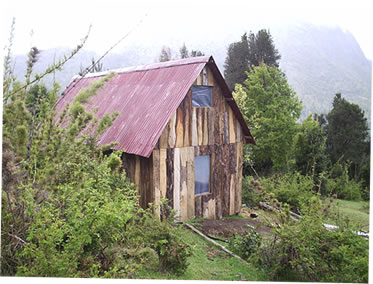
Lodging : Refugio Trafkura guesthouse (with alternative in Santa Elvira Cabins), traditional RUKA in Quinquén, touristic cabins managed by indigenous families on the Icalma lake shore, camps set by Trafkuraexpediciones.
Food : Traditional Chilean and Mapuche gastronomy, local farm products and a group option for a vegetarian diet. This program includes complete fooding including 3 meals a day as well as hike food rations.
Group sizes : 2 to 12 persons
Departure schedule : To be arranged when reservation payment is made.
Schedule : Day 1 : Temuco city tour and transfer to Refugio Trafkura. Day 2 : Trek from Refugio Trafkura to China Muerta National Reserve. Day 3 : Trek from China Muerta to Coyamento area. Day 4 : Trek from Coyamento to Galletue Lake and encounter with Quinquén indigenous community. Day 5 : Trek from Quinquén to Icalma Lake, visiting the Biobío river watershed. Day 6 : Trek from Icalma to Marcial mountain range and lagoons. Day 7 : Transfer from Marcial to Molulco hot spring waters and lodge in Refugio Trafkura. Day 8 : Departure.
Rates : US$850.00 or $420.000 pesos p/p

2.-Intercultural encounter : Journey to the Pewenche Country
Duration : 3 days
Difficulty : Easy
Age Minimum : None.
Season : All year long.
Trip Highlights : Encounter with Mapuche Pewenche communities, loom weaving demonstrations, handicrafts, Icalma and Biobío Lakes, Biobío river watershed, ancient araucaria forests and bird watching.
Lodging : Demonstrative Ruka in Quinquén community, modern touristic cabins at the shores of Icalma Lake in the heart of Pedro Kalfukeo community and its ancient forests.
Food : Mapuche gastronomy, local farm products with a group option for a vegetarian diet. The program includes complete fooding, 3 meals a day and hike food rations.
Group sizes : 2 to 12 persons
Departure schedule : To arrange through reservation payment.
Trip schedule : Day 1 : Temuco city tour, transfer to the mountains of Lonquimay area and encounter with Quinquén community. Day 2 : Exploring Biobío watershed and Pewenche “veranadas” or summer highlands. Day 3 : Bird watching in Icalma Lake and departure.
Rates : US$260.00 or $130.000 pesos p/p
3.-Classes of Mapuche loom weaving or Witral
Duration : 12 days in total, 9 days of classes, 4 hours of daily lessons and 36 hours in total
Age Minimum : 12 years old.
Season : All year.
Highlights : Mapuche-Pewenche communities and the pristine nature they live in, daily living with indigenous families, forests, animals and places of Pewenche territory, manual with concepts and iconography of Mapuche traditional weaving, basic knowledge on how to engineer a Mapuche loom or witral, spinning and dying of wool, and making a textile piece.
Lodging : Living with the weaver and her family who will afford the guest a private room, with the alternative to stay in a touristic cabin within the community (will incur an additional charge)
Food : Mapuche gastronomy and farm products with a group option for a vegetarian diet. The program includes 3 meals a day.
Group sizes : 1 to 4 persons
Schedule : Day 1 : Transfer to Refugio Trafkura and cultural introductory speak around the fire and the mates. Day 2 : Transfer to Pedro Kalfukeo community, introduce the student with the host family and the weaver who will be “their master”. Day 3 : Mapuche world and daily life, racing ships and washing wool. Day 4 : Spinning with spindle. Day 5 : Dying the thread. Day 6 : Engineering the loom. Day 7 to 11 : Learning to weave and making a piece. 12 : Free day, optional trek and departure.
Rate : US$850.00 or $420.000 pesos per persons, with discounts for groups of 2 or more.
One of the most innovative programs of Trafkuraexpediciones for the 2007-08 season is, the traditional Mapuche weaving classes within Mapuche communities. This concept merges education, interculturality, and a close connection with nature which encompass the core beliefs and ideas of our ecotourism proposal at Trafkuraexpediciones.
For the weavers, the development of this project signifies their ability to contribute strongly to the economic and cultural sustainability of their communities and, enhance the value of their antique Mapuche textile art.
For the student this activity signifies an immersion in the rhythms and manners of subsistence and daily life of the Mapuche communities of southern Chile. And, of course the student will keep their own personal piece of their enchanted experience : their Witral.
In this endeavor weavers and the Trafkuraexpediciones staff are joining together to generate a flexible program of loom weaving classes open to Hispanic and English speakers. Trafkuraexpediciones will supply a manual with essential concepts of Mapuche life and traditional weaving, textile iconography, pictures and rudimentary instructions in Spanish and English to facilitate the transfer of knowledge and unique vocabulary of Mapuche weaving. Weavers are bilingual, meaning they speak the Mapuche language and Spanish but, most importantly the language of threads.
GPS coordinates
38°50’50.87"S 71°24’30.28"W